Skip to the content
[ ]

LSPHIL

LSPHIL › Learning & teaching languages

Learning & teaching languages

6 materials · updated

Learning and teaching languages is full of numbers that look exact and are not: a level, a vocabulary size, an interval. This desk takes them apart one at a time. What B1 actually licenses you to do, how many words a newspaper needs, why a spacing schedule stops working, and which drill fixes which gap.

The desk in numbers

Every material on this desk, longest first.

Register of the Learning & teaching languages desk — 6 materials, 5,135 words in all. Compiled from the LSPHIL catalogue on 2026-10-10; lengths are counted from the published pages.
MaterialLanguageKindWords
What You Can Actually Do at B1 Level (and What the CEFR Never Promises)EnglishFeature1074
Mother-Tongue Instruction Is Not a Slogan: The DepEd Orders That Actually Define Philippine MTB-MLEEnglishFeature1072
How Many Words to Read a Newspaper? The Answer Depends on What You CountEnglishFeature807
Shadowing, Dictation and Chorusing: Three Drills for Three Different GapsEnglishFeature766
Why Spaced Repetition Stops Working: The Interval Is Not the ProblemEnglishFeature724
Gamification in Language Apps: Boon or Distraction?EnglishFeed692
Total1 languages6 materials5,135

On this desk

What the levels, the vocabulary numbers and the drills actually measure — and what they do not.

Learning & teaching languagesEnglish1074 words

What You Can Actually Do at B1 Level (and What the CEFR Never Promises)

The Common European Framework of Reference for Languages does not measure how long you have studied, how many words you know, or what score you got on a test. It publishes "can-do" descriptors: concrete statements of what a learner can handle in specific situations.
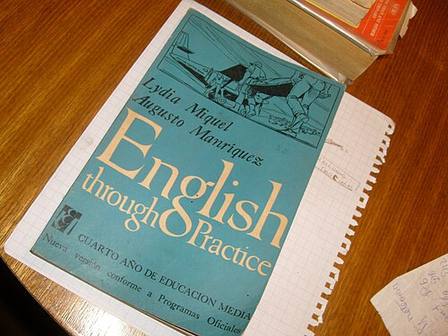
English textbook
English textbook. Penarc · CC BY-SA 3.0 · Wikimedia Commons

English · 1074 words · Read

Learning & teaching languagesEnglish807 words

How Many Words to Read a Newspaper? The Answer Depends on What You Count

The percentage of words in a text that a reader actually knows—what researchers call "lexical coverage"—is the number that determines whether reading flows or stutters. But ask "how many words do you need?" and the answer collapses into confusion unless you first specify the unit of counting. A word family bundles "run," "runs," "running," and "runner" together.

Archiv ostfraenkisches Woerterbuch
Archiv ostfraenkisches Woerterbuch. J. Lunau · CC BY-SA 2.5 · Wikimedia Commons

English · 807 words · Read

Learning & teaching languagesEnglish724 words

Why Spaced Repetition Stops Working: The Interval Is Not the Problem

The interval in a spaced-repetition system is not a magic timer that fixes weak cards. SuperMemo says it schedules each review at the point where the probability of remembering an item drops to 90%, and a successful retrieval earns a longer delay while a failed one brings the card back within days. When a deck stops working, the culprit is rarely the algorithm. It is almost always the card.

Zettelkasten (514941699)
Zettelkasten (514941699). Kai Schreiber from Münster, Germany · CC BY-SA 2.0 · Wikimedia Commons

English · 724 words · Read

Learning & teaching languagesEnglish1072 words

Mother-Tongue Instruction Is Not a Slogan: The DepEd Orders That Actually Define Philippine MTB-MLE

The argument over mother-tongue instruction in Philippine public schools rarely matches the documents that govern it. Supporters call it a remedy for early-grade dropout; critics call it an obstacle to English. Both sides often treat the policy as a slogan rather than a set of published conditions with specific limits.

Kok (ꯀ) - K - Kei (tiger) - Basic Meitei Mayek (Meetei Mayek) alphabet learning primer
Kok (ꯀ) - K - Kei (tiger) - Basic Meitei Mayek (Meetei Mayek) alphabet learning primer. Haoreima · CC0 · Wikimedia Commons

English · 1072 words · Read

Learning & teaching languagesEnglish766 words

Shadowing, Dictation and Chorusing: Three Drills for Three Different Gaps

Language learners often cycle through the same recording hoping something will stick. The real problem is rarely effort; it is mismatch. Three drills—shadowing, dictation and chorusing—target three separate failures. One trains the mouth to keep pace with native rhythm. One forces the ear to turn sound into written form. One burns a short phrase into fluent, automatic speech.

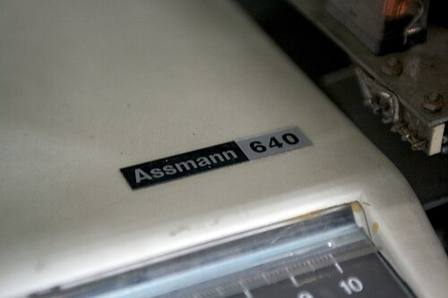
Assmann 640 Universa dictation machine (2323675750)
Assmann 640 Universa dictation machine (2323675750). Marcin Wichary from San Francisco, Calif. · CC BY 2.0 · Wikimedia Commons

English · 766 words · Read