LSPHIL › Translation & interpreting › Simultaneous vs. Consecutive Interpreting: What Each Mode Costs Your Event
Simultaneous vs. Consecutive Interpreting: What Each Mode Costs Your Event
Simultaneous interpreters speak while the source speaker continues. Consecutive interpreters wait for pauses—or for the speaker to finish entirely—before rendering the message. This single operational difference governs everything that follows: how long the event runs, how many interpreters you need, and how much information survives the transfer intact.
English · 704 words
The Lag That Eats Time or Eats Accuracy
In simultaneous interpreting, the delay between incoming speech and target output averages two to three seconds. That lag is what real-time delivery costs. The interpreter listens, processes, and speaks almost concurrently, holding three concurrent efforts at once—listening and analysis, memory, and production—within a fixed capacity: L + M + P < Capacity. The constraint is fixed. Exceed working memory capacity, and something drops.
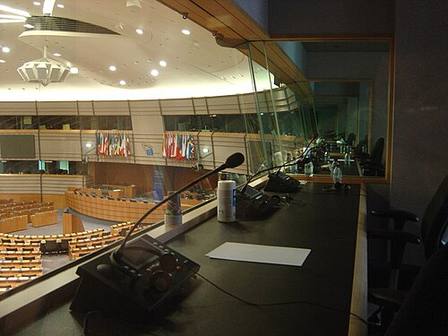
Consecutive interpreters trade the time lag for a memory lag. They listen as the primary speaker speaks, then interpret once that speaker has finished, as the same Sage Journals study notes. The event stretches. But the interpreter gains something simultaneous mode denies: the chance to write down names in source-language order and handle word-order changes during reformulation, as Gile observed in a 2001 JAIS article. The cost is cumulative delay. The benefit is structural control over how information exits.
What Gets Lost in the Buffer
Gile's 2001 analysis warned that writing multi-word names in consecutive interpreting lengthens lag behind the speaker and may trigger memory overload. The interpreter is already managing a buffer of unsaid content. Add transcription demands, and the buffer compresses.
A study published in the Journal of General Internal Medicine found that interpreted renditions in consecutive mode were 15% more likely to show omissions than simultaneously interpreted renditions. The gap is modest but measurable, and it matters in settings where a dropped modifier changes a dosage or a missed negation alters a legal status. The interpreter in simultaneous mode sacrifices depth of processing for speed; the consecutive interpreter sacrifices pace for completeness. Neither escapes loss. They distribute it differently.
Where Courts Constrain the Choice
Alaska court guidance directs that simultaneous interpreting be used "whenever participants, most often defendants, are playing a passive role in court proceedings such as arraignments, hearings, or trials." The logic is operational: passive participants do not need turn-taking pauses, so the court gains efficiency. The interpreter absorbs the cognitive load alone.
Vermont's Court Interpreter Manual, published by the National Center for State Courts in January 2025, defines consecutive interpreting as rendering statements "intermittently after a pause between each completed statement, after the speaker has stopped speaking." The definition implies a setting where speakers alternate—examinations, direct questioning, witness testimony. The mode matches the procedure.
California goes further. A Judicial Council guidance document recommends that courts "use a technical solution that will allow for simultaneous interpreting in virtual remote interpreting settings." The remote environment, with its already-compressed social cues and latency risks, defaults to the faster mode. Technology enables what procedure might otherwise resist.
The Standards-Based Reality
ASTM F2089-01 states plainly that interpreting is offered in two different modes—consecutive and simultaneous—and that "not all interpreters work in both modes." This is not a staffing footnote. It is a procurement constraint. An event planner who assumes interchangeable availability may find themselves with a consecutive specialist in a proceeding that California guidance says should run simultaneous, or with a simultaneous interpreter facing a witness examination that demands note-heavy consecutive work.
The Maryland Courts guidance document confirms the definitional distinction without prescribing universal application. The framework is consistent; the deployment is situational.
The Choice Is Rarely Yours Alone
The practical question for event organizers is rarely which mode is abstractly superior. It is which mode the setting permits.
Courts with passive-role defendants, per Alaska guidance, have already chosen. Virtual proceedings in California court systems, per Judicial Council recommendations, have already chosen. Medical settings with error-sensitive content, per the Cleveland Clinic findings, carry a 15% omission premium if they select consecutive mode without adjusting for it.
What remains discretionary is the margin: how many interpreters to rotate before fatigue degrades the two-to-three-second simultaneous lag into something less recoverable; whether to build in consecutive pauses for proper names that resist real-time reordering; whether the remote platform's technical solution actually delivers the simultaneous capability California courts assume.
The constraint is the starting point. The trade-off follows.
The register
What the rail used to do: newest, more on this desk, other languages.
- "Untranslatable" Is a Marketing WordEnglish · 1199 words
- Back-Translation Checks Meaning Drift, But It Cannot Prove a Translation WorksEnglish · 862 words
- Why Machine Translation Makes Mistakes That Sound PerfectEnglish · 886 words
- Translating Poker Terms: Challenges and Clever SolutionsEnglish · 2212 words
In other languages
- Cómo se escriben los nombres extranjeros en español: transferencia, adaptación o tradiciónEspañol · 958 words
- Warum das Deutsche Substantive großschreibt – und was das im Satz leistetDeutsch · 874 words
- Hvorfor dansk staves anderledes end det udtalesDansk · 641 words
- Casino bonussenNederlands · 782 words
Newest on the site
- How Baybayin Letters Work: A Primer on the Philippines' Abugida ScriptEnglish · 1004 words
- How to Classify Any Script in Two Questions: What One Sign Means, and What Happens When the Vowel ChangesEnglish · 915 words
- Do Accent Marks Change Meaning? It Depends on the Language's RulesEnglish · 1009 words
- Why Spelling Reforms Succeed in Some Languages and Collapse in OthersEnglish · 987 words