LSPHIL › Philippine languages › Filipino Is the National Language. Tagalog Is the Census Category. That Distinction Matters.
Filipino Is the National Language. Tagalog Is the Census Category. That Distinction Matters.
The 1987 Constitution is unambiguous: "The national language of the Philippines is Filipino." Article XIV, Section 6 leaves no room for synonyms. Yet Executive Order No. 134, issued in 1937 under President Manuel L. Quezon, declared the national language would be "so based on the Tagalog dialect." That historical foundation still shapes how Filipinos encounter these names today—in classrooms, on government forms, and in the periodic national census. The result is a persistent confusion that official documents themselves do not resolve.
English · 771 words
The Constitutional Label and Its Historical Foundation
The 1987 Constitution uses "Filipino" exclusively for the national language. Section 6 of Article XIV mandates that this language "shall be further developed and enriched on the basis of existing Philippine and other languages." Section 7 adds that the official languages are Filipino and, "until otherwise provided by law," English. The document never names Tagalog.
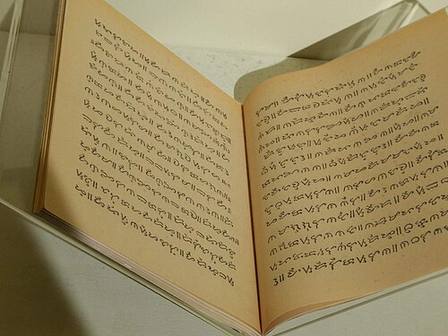
The constitutional text deliberately moved away from the 1937 formulation. Executive Order No. 134 had approved "the adoption of Tagalog as the basis of the national language," describing it explicitly as "the national language so based on the Tagalog dialect." The constitutional framers of 1987 replaced that construction with a proper name, Filipino, while retaining the mandate to build upon multiple language traditions. The shift was structural: from identifying a basis language to naming a national institution.
What Official Statistics Actually Count
The Philippine Statistics Authority operates on different terminology. Its 2020 Census of Population and Housing recorded Tagalog—not Filipino—as the language spoken in 10,522,507 households, representing 39.9 percent of the country's 26,388,654 households. The PSA repeated this figure in subsequent statistical releases.
This classification is functional. Census respondents identify what they speak at home. Tagalog, as the language of Metro Manila and surrounding provinces, is what they name. The PSA does not treat Filipino and Tagalog as separate response categories in its published tables. The constitutional national language does not appear as a census line item. A household reporting Tagalog is not asked whether they mean Filipino; the categories are administratively distinct even when speakers themselves use the terms interchangeably.
The Spelling Standard and Its Authority
Orthographic authority falls to the Komisyon sa Wikang Filipino. The commission's published reference is the Ortograpiyang Pambansa of 2013, cited in training materials as the model orthography for Philippine languages. These materials, prepared for United Nations geoinformation programs, note that Philippine languages generally employ Romanized writing systems and can be categorized into Spanish-based and Filipino-based systems.
The commission does not publish a separate "Tagalog orthography" as distinct from the national standard. The 2013 document governs spelling across the language family while accommodating phonemes borrowed from Spanish, English, and other Philippine languages. This represents the practical institutionalization of the constitutional mandate: one writing standard, national in scope, rather than a Tagalog standard simply relabeled.
How the Labels Diverge in Practice
Filipino appears in constitutional text, legal education, and official bilingual signage. Tagalog appears in census questionnaires, linguistic scholarship, and everyday conversation. Even the descriptions that treat the two names as one language keep the nominal distinction intact: Filipino is called a standardized form, Tagalog the language it standardizes. Standardized form and source language are not the same object, whatever the overlap in practice.
The documentary record thus produces three separable references. Filipino is the constitutional national language, mandated for development from multiple sources. Tagalog is the historical basis named in 1937 executive action. And Tagalog is simultaneously a census category capturing household language use, one that does not map cleanly onto either the constitutional definition or the historical origin.
Where Confusion Persists
Government forms, school curricula, and broadcast subtitling operate in this gap. A form asking for "native language" may prompt either answer. A teacher explaining the national language may use either name, or both. The PSA has not published tables that separate "Filipino" and "Tagalog" as distinct response categories, so researchers cannot measure how respondents themselves distinguish the terms.
The commission has not issued a plain-language statement directly contrasting the two names for general circulation. Its orthography document governs practice without resolving nomenclature. The Constitution settles the legal question but does not govern casual usage. The census captures behavior but does not align its categories with constitutional definitions.
What remains unsettled is whether any future census will introduce Filipino as a separate line item, or whether the statistical practice will eventually conform to the constitutional terminology. For now, the documents speak with different voices. The reader who needs to settle a question about which label applies in which context must first identify the domain: constitutional law, historical executive action, or population statistics. The answer depends on which document has authority there.
The register
What the rail used to do: newest, more on this desk, other languages.
- Why the Count of Philippine Languages Keeps MovingEnglish · 997 words
- Why Filipino, Not Cebuano, Is the Philippines' National LanguageEnglish · 832 words
- Taglish Shows Code-Switching Follows Grammatical Rules, Not Random HabitEnglish · 821 words
- 2nd Philippine Linguistics InstituteEnglish · 522 words
In other languages
- Cómo se escriben los nombres extranjeros en español: transferencia, adaptación o tradiciónEspañol · 958 words
- Warum das Deutsche Substantive großschreibt – und was das im Satz leistetDeutsch · 874 words
- Hvorfor dansk staves anderledes end det udtalesDansk · 641 words
- Casino bonussenNederlands · 782 words
Newest on the site
- How Baybayin Letters Work: A Primer on the Philippines' Abugida ScriptEnglish · 1004 words
- How to Classify Any Script in Two Questions: What One Sign Means, and What Happens When the Vowel ChangesEnglish · 915 words
- Do Accent Marks Change Meaning? It Depends on the Language's RulesEnglish · 1009 words
- Why Spelling Reforms Succeed in Some Languages and Collapse in OthersEnglish · 987 words