LSPHIL › Research & academia › What Is in a Language Documentation Corpus
What Is in a Language Documentation Corpus
Language documentation is not language description. That distinction matters from the first day of fieldwork to the last file uploaded to an archive. A grammar or dictionary describes a language; a documentation corpus preserves it as a reusable, checkable, and ethically governed record. The corpus is the point. Without the deposit, the work is unfinished.
English · 1146 words
What a documentation corpus contains
The core of a language documentation corpus is audio and video materials, time-aligned transcriptions, annotations, translations into a language of wider communication, and metadata on context and use. That definition, standard in the field, already signals that documentation produces a bundle, not a single text. A 2021 volume on language revitalization emphasizes that documenters create an organized collection—called a corpus—of examples of language use in social and cultural context. The record captures speech as it happens, where it happens, among whom it happens.
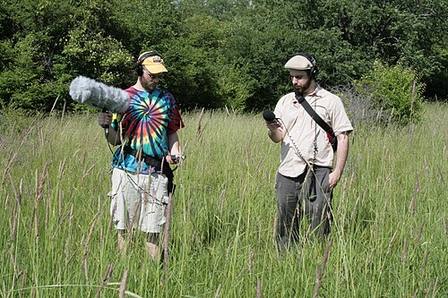
Beyond the recordings themselves, a corpus can include aligned and annotated transcriptions, databases, lexica, metadata, and metadocumentation about the materials. Time-aligned transcription is the linchpin: without it, video and audio are unsearchable masses. With it, a researcher or community member can locate a specific utterance, check what was said, and see who said it. The annotation and translation layers make the material legible to those who do not speak the language. The metadata layers make it findable and usable by others later.
Language documenters stress that a copy of the corpus should be placed in an archive together with metadata about speakers, ages, recording locations, and collectors. That deposit is not an afterthought. It is the moment when fieldwork becomes a lasting record.
Why the archive deposit is the point
Archival versions of materials should be deposited into an archive as soon as possible after collection, and should be complete, lossless, and unedited to the extent possible. That instruction, from a 2018 Oxford Academic chapter on language archiving, captures a practical ethic: the field recording is the foundation, and every compression, every edit, every delay risks degrading what future users can work with.
The archive's role is to let providers lodge materials and let users find and access them if permissions allow. This two-sided function—ingest and access—shapes what documentation actually produces. A corpus sitting on a researcher's hard drive, or shared only among collaborators, is not documentation in the full sense. It is raw material. The deposit transforms it into a resource that survives equipment failure, personnel changes, and the decades-long gaps that characterize work with endangered languages.
Descriptive metadata is a key component of an archived collection and helps potential users discover items and judge whether they are relevant enough to access. The archive enables search and selection. Without that infrastructure, a corpus is a locked box with no key.
Metadata is not decoration
Metadata carries discovery, citation, and re-use. The Language Archive, states that metadata is information about the archived materials that allows others to discover and re-use them. That sounds dry until you try to locate a specific conversation about fishing rights recorded in 1987 in a coastal village whose name has changed. The metadata records speakers, places, dates, collectors, and context. It transforms a file name into a findable, citable resource.
When creating a collection, depositors at The Language Archive must select a metadata profile. For most language corpora, the required profile is lat-corpus. That requirement shapes what information gets recorded and how it is structured. The profile is not neutral. It embeds decisions about what future users will need to know, and it constrains depositors to document those things consistently.
Consent and access travel with the record
A language documentation archive workflow can begin with informed consent from speakers and metadata about sensitivity and access for each recording. That sequencing is deliberate. Consent and access conditions are part of documentation from the start, not administrative hurdles added later. A 2013 source on access at ELAR (the Endangered Languages Archive) describes how documentation projects must negotiate permissions before the archive can accept materials.
The Language Archive distinguishes "open" materials, accessible by anyone without logging in, from "restricted" materials, accessible only to the depositor and authenticated users. The depositor must select an initial access policy at deposit time. That decision, recorded in the metadata, becomes part of the corpus itself. Access is different from copyright, and depositors should balance legal rules with ethical obligations when determining access and use conditions. The Oxford chapter on language archiving makes that point explicitly: a researcher may hold copyright while speakers or communities hold legitimate interests in restricting circulation. The corpus records both.
This means a documentation corpus is always a managed record. It carries not only what was said and who said it, but what they agreed could be done with that information.
How archives make a corpus usable later
The archive-side conventions turn a deposited collection into a usable resource. The metadata profile, the access policy, the descriptive fields, and the technical standards for file formats all shape what happens decades later. The Language Archive's deposit manual specifies that for most language corpora, the profile should be lat-corpus. That standardization can support cross-collection search. A researcher looking for materials on tone systems in Austronesian languages can find them because the metadata was structured predictably.
The access policy selected at deposit time governs who can see what. Open and restricted are the broad categories, but the archive infrastructure supports finer gradations. The depositor retains control, but the conditions are transparent and embedded in the record. Future users know what they are permitted to do before they request access.
What the evidence does and does not establish
The sources establish the core components clearly: audio and video, time-aligned transcription, annotation, translation, metadata on context, and metadata on speakers, locations, and collectors. They establish that archival deposit should be prompt, complete, lossless, and unedited. They establish that access conditions are recorded at deposit, not imposed later.
Some claims common in discussions of documentation do not appear in these sources. No primary source here states that "a transcript is already an analysis" in exactly those words—a formulation sometimes attributed to documentary linguistics. The sources mention annotation broadly without naming interlinear glossed text specifically as a required or standard component. No source here guarantees that materials will remain usable in fifty years as a formal archive commitment. The evidence supports a robust standard of care, not a specific horizon.
What the sources do show is sufficient: a documentation corpus is a deliberately constructed, ethically governed, and archivally secured record. It is designed for re-use, re-checking, and reinterpretation by people who were not present when the recordings were made and who may not yet be born. The archive deposit, complete with metadata and access conditions, is what makes that possible.
A corpus lasts only if it is deposited with metadata that lets future users find it and permissions that let them know what they can do with it.
The register
What the rail used to do: newest, more on this desk, other languages.
- How to Read a Linguistics Paper Without Being a LinguistEnglish · 1000 words
- What "Endangered Language" Actually Measures: Why the First Question Should Not Be "How Many Speakers?"English · 1186 words
- 2014 Conference registrationEnglish · 104 words
- 2014 Conference proposal submissionEnglish · 302 words
In other languages
- Cómo se escriben los nombres extranjeros en español: transferencia, adaptación o tradiciónEspañol · 958 words
- Warum das Deutsche Substantive großschreibt – und was das im Satz leistetDeutsch · 874 words
- Hvorfor dansk staves anderledes end det udtalesDansk · 641 words
- Casino bonussenNederlands · 782 words
Newest on the site
- How Baybayin Letters Work: A Primer on the Philippines' Abugida ScriptEnglish · 1004 words
- How to Classify Any Script in Two Questions: What One Sign Means, and What Happens When the Vowel ChangesEnglish · 915 words
- Do Accent Marks Change Meaning? It Depends on the Language's RulesEnglish · 1009 words
- Why Spelling Reforms Succeed in Some Languages and Collapse in OthersEnglish · 987 words